
C is for Cauliflower
Cauliflower is a small head of thousands of compact flowers. It is one of the cruciferous vegetables that in recent years have been linked with lower rates of many diseases particularly cancer and heart disease so an exceptionally good addition to your diet. Other cruciferous vegetables are broccoli, kale, Brussels sprouts spinach, and cabbage.
In the past few weeks, I have been eating more cauliflower because they are grown here in the UK, and I like to support our farmers. This year they seem particularly delicious. My brother is vegetarian so last week I made him cauliflower cheese, served with roast vegetables, tasty and a good balanced meal.
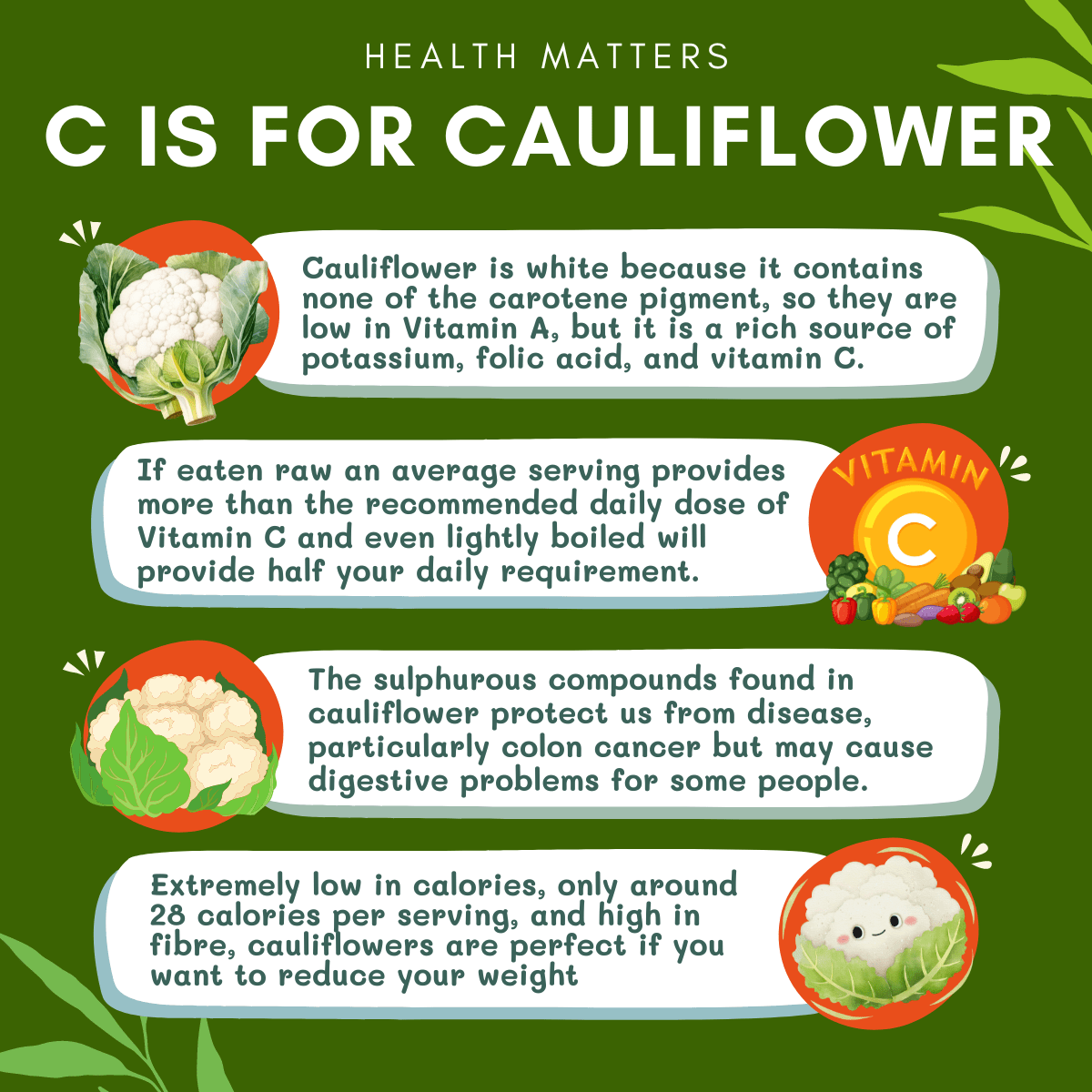
- Cauliflower is white because it contains none of the carotene pigment, so they are low in Vitamin A, but it is a rich source of potassium, folic acid, and vitamin C.
- Interestingly, it contains approximately 25% protein so particularly good for vegetarians.
- If eaten raw an average helping of cauliflower provides you with more than the recommended daily intake of Vitamin C and even lightly boiled will still provide you with half your daily requirement.
- It is the sulphurous compounds found in cauliflower that protect us from disease, particularly colon cancer but may also cause digestive problems for some people.
- Extremely low in calories only approximately twenty-eight calories per serving, and high in fibre, cauliflowers are a terrific addition to your diet if you want to reduce your weight.
I often use raw cauliflower in salads and for dips. A lovely vegetable with your Sunday roast, which takes me straight back to being a child when Sunday lunch was the highlight of the week. Also great added to any curry dish and the garlic, ground coriander and cumin will aid digestion and dare I say reduce flatulence!