
Health Matters – An A to Z Guide to Good Health – H is for Honey
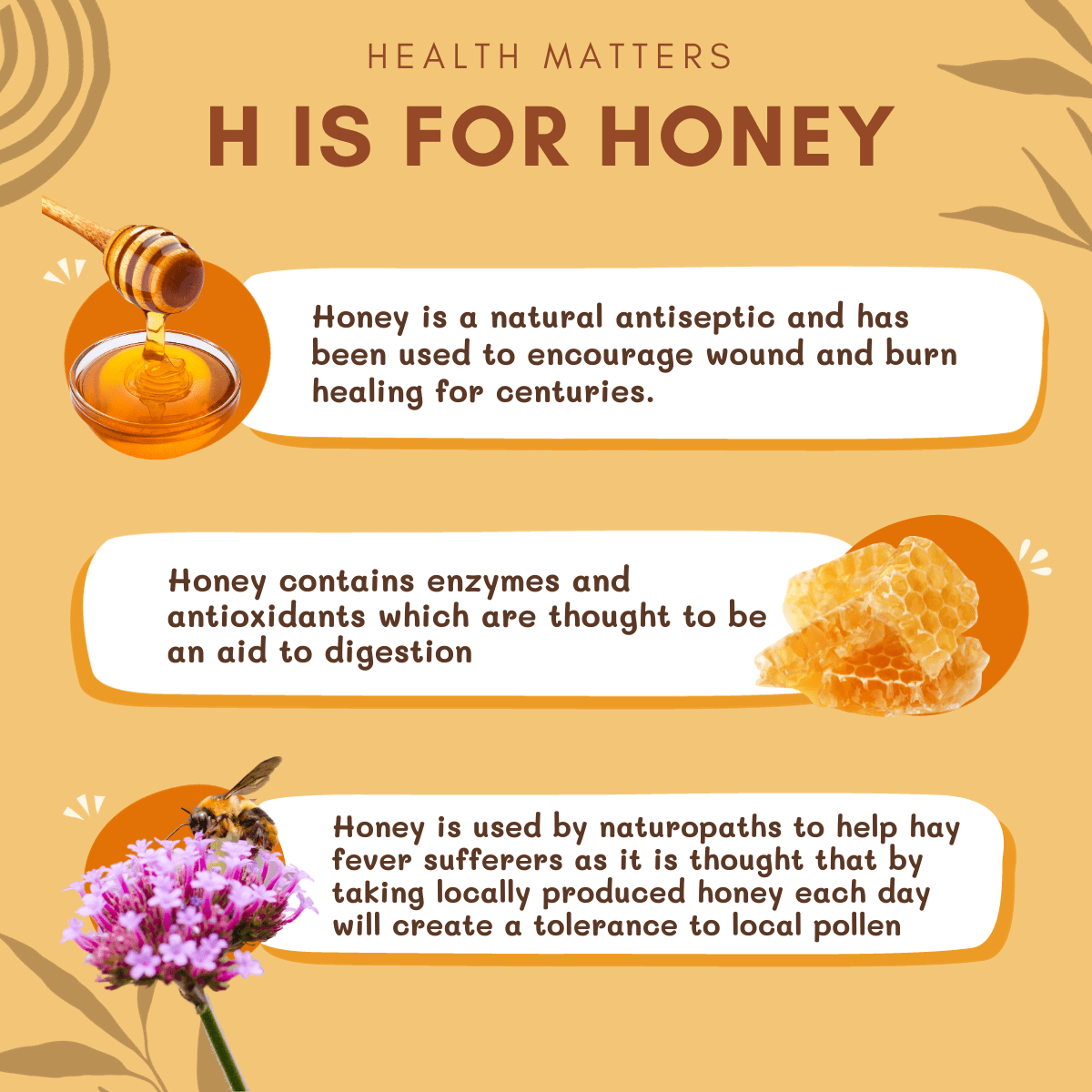
Honey an ancient health food; it was used by the Ancient Greeks and Romans to help heal wounds. Bees produce honey by taking the sweet substance secreted by flowers, which is the nectar, and this is mixed by regurgitation with enzymes from the bees. It is a mixture of nectar, water and two simple sugars, fructose and glucose. It takes one and a half million flowers to make a single jar, hence the saying “busy bees”! 🐝
The flavour of honey is dependent upon the flowers the bees have visited. 🌼 Acacia honey has a mild flavour which makes it good for cooking and you can substitute honey for refined sugar in recipes for a healthier option. Remember honey weighs heavier than sugar and is naturally sweeter. Manuka honey made from the flowers of the Manuka bush in New Zealand has become popular in recent years because of its powerful antibacterial qualities.
🍯 Honey is mainly carbohydrate – fructose and glucose but also contains traces of B and C vitamins, magnesium, potassium, calcium, sodium chlorine, sulphur, iron and phosphate.
🍯 Honey is a natural antiseptic and has been used to encourage wound and burn healing for centuries.
🍯 Honey contains enzymes and antioxidants which are thought to be an aid to digestion.
🍯 Honey is used by naturopaths to help hay fever sufferers as it is thought that by taking locally produced honey each day will create a tolerance to local pollen.
Care must be taken with young children; it is not recommend for babies as honey may contain naturally occurring toxins which can create an allergic reaction. My own Grandson’s mouth became swollen after eating honey when he was a year old. He now eats it regularly.
Live with joy and health. 💚
Elizabeth Beetham